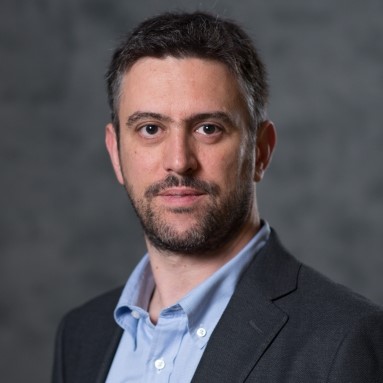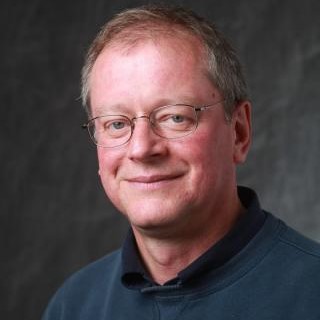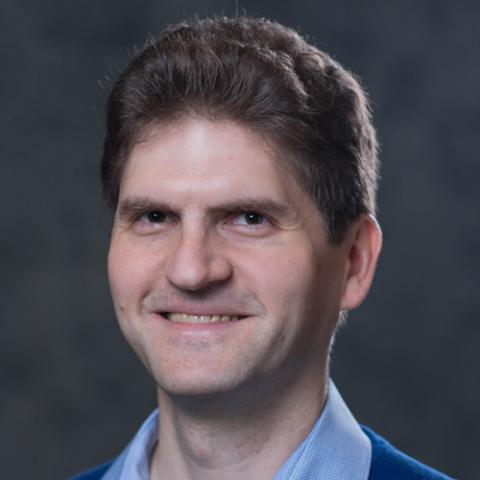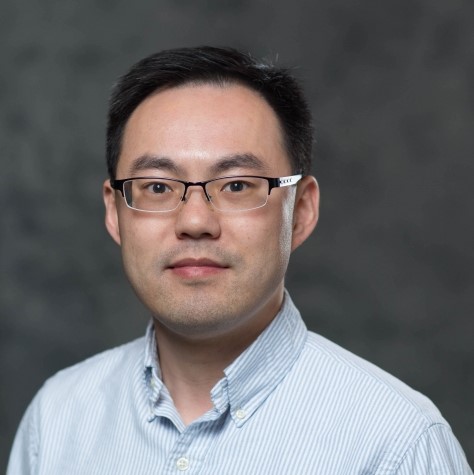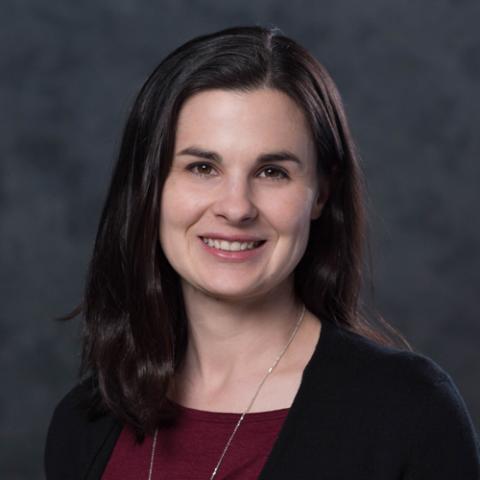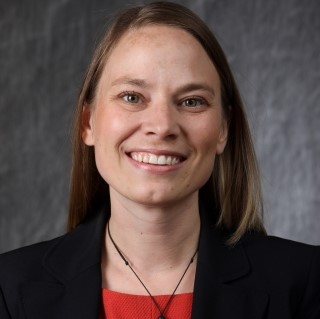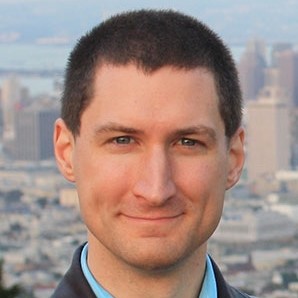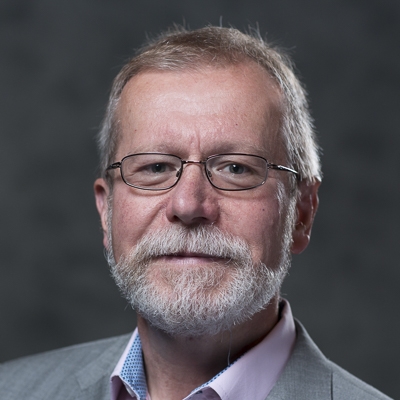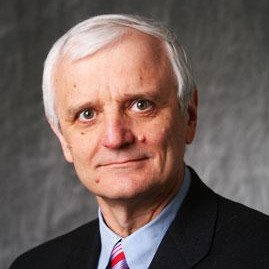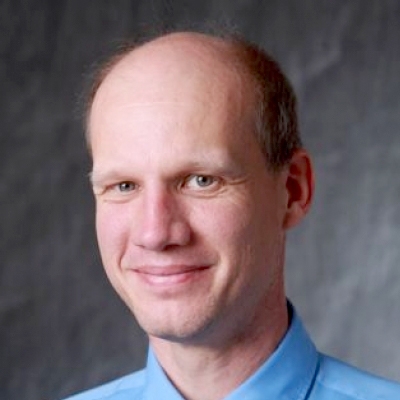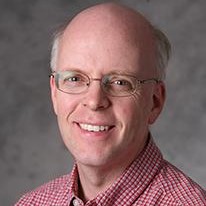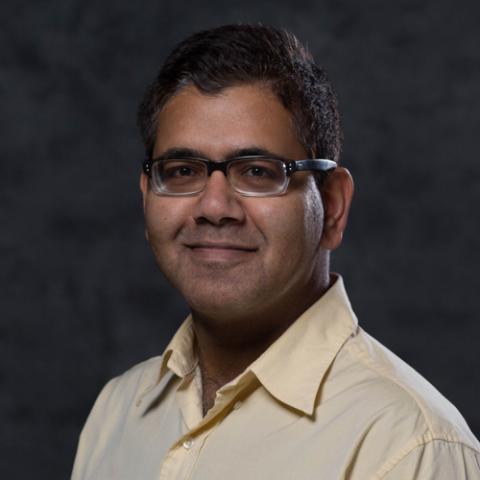
Elliot Anshelevich
Elliot works in the area of algorithms and theoretical computer science, especially on issues at the intersection of Economics and Computation.
Elliot works in the area of algorithms and theoretical computer science, especially on issues at the intersection of Economics and Computation.
Dr. Bennett's research specialty is working with people with problems and data and then developing novel machine learning and AI models and work flows to solve their problems.
B. Wayne Bequette's research efforts are focused on the modeling and control of biomedical and chemical process systems.
Selmer Bringsjord specializes in the logico-mathematical and philosophical foundations of artificial intelligence (AI) and cognitive science, and in collaboratively building AI systems on the basis of computational logic.
Dr. Chen's current research focuses on the theory and application of optimization, machine Learning, and statistical signal processing to problems emerging in data science and wireless communication networks.
Professor Clark's research focuses on financial intermediation and risk management with an emphasis on machine learning.
Professor Cunha's research focuses on Turbomachinery Development and Turbine Blade Analysis, Advanced Thermodynamics and Energy Systems, Solid and Fluid Mechanics, Computer Modeling and Simulation, Heat Transfer Testing, Slot Cooling and Thermal-Mechanical Fatique.
Professor Cutler's research interests include computer graphics, geometry processing, visualization, and design tools for architecture.
Professor Embrechts' research focuses on Data Mining, Big Data, Neural Networks, Genetic Algorithms, Computational Intelligence, Biocomputing, Drug Design, Big Data for Renewable Energy and Statistics.
W. Randolph Franklin's current research hobby is designing and implementing small, simple, and fast data structures and algorithms for large geometric datasets.
Jianxi Gao's research is focused on using network theory, control theory, statistic physics, and operation research to understand, predict, and ultimately control the resilience, cascading failures of complex systems.
Dr. Gittens' interests lie in applying randomness to computational linear algebra, machine learning, and statistics, and are motivated by the goal of efficiently extracting information from massive data sets while maintaining guarantees on rigor and accuracy.
Dr. Gupta's interest is in developing enterprise risk management strategies and analyzing incentives for risk management.
Dr. Hella's research interests include the areas of mm-wave and THz circuits and systems, energy harvesting and sensor design.
Professor Hicken's research is focused on Simulation-based Design, Optimization, Aerodynamics, Computational Fluid Dynamics and Shape Optimization.
Professor Intes' research is focused on biomedical imaging, biomedical instrumentation, medical devices, biophotonics and Deep Learning.
Professor Isaacson works in two areas: mathematical physics and medical imaging.
Professor Ji's research focuses on Computer Vision, Probabilistic Graphical Models, Machine Learning, Affective Computing, Human Behavior and State Modeling, Monitoring, and Recognition, Natural Human and Machine Interactions, Active Information Fusion for Situation Awareness and Decision Making under Uncertainty.
Professor Kopsaflapoulos' research focuses on intelligent structural systems, structural health monitoring diagnostics and prognostics, stochastic system identification and machine learning, fly-by-feel aerial vehicles, bio-inspired systems and smart materials and structures.
Professor Kovacic's current research interests include studies of nonlinear evolution equations and their scientific applications, particularly in dispersive waves, optics, and neuroscience.
Dr. Kramer's research focuses on the application of ideas and techniques from probability theory and differential equations to model and analyze complex systems which evolve in time and involve too many variables to represent explicitly in a practical computational model.
Dr. Lai’s research interests are mainly in developing mathematical and computational tools for analyzing and processing signals, images as well as unorganized data using methods of variational partial differential equations, computational differential geometry and learning.
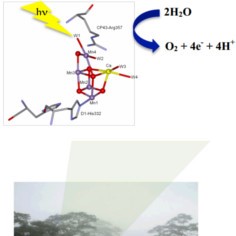
Professor Lakshmi's research focuses on Physical Chemistry, Inorganic Chemistry, Biochemistry and Biophysical Chemistry, Bioinorganic Chemistry, Cheminformatics and Computational Chemistry, Polymers, Materials and Energy, Green Chemistry and Sustainability, Solar Energy Conversion, Natural and Artificial Photosynthesis, Analytical and Bioanalytical Chemistry.
Professor Lewis' computational work involves study of morphological evolution during processing and image driven machine learning.
Professor Lim's research focuses on Network Science, Computations on networks, Applied Stochastics, Vortex Dynamics, Statistical physics and turbulence, Symmetric Dynamical Systems and Combinatorial Matrix Theory.
Professor Malik's research interests are in decision making from data in complex systems, including machine learning, computational finance and social and communication networks.
Professor Mathur's research focuses on Systems Modeling and Optimization and Systems Requirements and Integration.
Professor McGuinness' main research thrusts are in languages, tools, and environments for the semantic web.
Professor Mitchell's interests are in various areas of optimization. From a theoretical point of view, he develops algorithms for integer optimization, conic optimization problems, and problems with complementarity constraints, areas that have multiple applications in allocation of resources as well as in other areas of science.
Professor Milanova's research centers around static program analysis and its applications in software productivity and security.
Professor Olausson's research focuses on Artificial General Intelligence, Machine Learning and Reinforcement Learning and Complexity and Network Science.
Professor Ozisik's research focuses on Computational Modeling and Simulations, Polymer nanocomposites, Polymer processing and characterization, Protein structure and dynamics, and Supercritical fluid assisted processing.
Professor Padalia's research focuses on Data Science, Advanced Analytics, Big Data, Data Management, Business Intelligence, Data Integration, Data Governance and Data Architecture.
Dr. Paternain's research interests lie at the intersection of machine learning and control of dynamical systems.
Professor Patterson's research interests are in the area of distributed machine learning, edge and cloud computing, and networked systems.
Dr. Jennifer Pazour’s research and teaching interests focus on the development and use of mathematical models to guide decision making for supply chain and logistics challenges.
Dr. Radke's current research interests involve computer vision problems related to human-scale, occupant-aware environments, such as person tracking and re-identification with cameras and range sensors.
Trevor David Rhone's research interests involve using machine learning tools for materials discovery and knowledge discovery.
Prof. Tomek Strzalkowski research interests span a wide spectrum of human language technology including computational linguistics and sociolinguistics, socio-behavioral computing, interactive information retrieval, question-answering, human-computer dialogue, serious games, social media analytics, formal semantics, and reversible grammars.
Professor Szymanski research interests cover the broad area of network science with current focus on social and computer networks.
Professor Tajer's research focuses on Machine Learning and Information Theory.
Dr. van Heuveln’s research is in the area of visual logic: using visual representations to perform and enhance logical reasoning.
Professor Walczyk's research focuses on Rapid Tooling, Environmentally Conscious Design and Machine Design.
Professor Wang's interests include medical imaging and artificial intelligence especially deep learning.
Professor Wang's research areas involve machine learning and data analytics, power system monitoring, signal processing, and optimization methods.
Professor Xia's research focuses on the intersection of computer science and microeconomics, in particular computational social choice, game theory, mechanism design, and prediction markets.
Dr. Xu's broad research interests are optimization theory and methods and their applications such as in machine learning, statistics, and signal processing.
The research goals Dr. Yan are to quantify, augment and visualize the information residing in large-scale multi-modality medical imaging data using artificial intelligence and computer vision technologies.
Prof. Yazıcı’s research interests span the areas of statistical signal processing, inverse problems in imaging, applied mathematics, remote sensing, biomedical optics, and radar.
Professor Yener's current research interests include applied machine learning in bioinformatics, medical informatics, and cyber security.
Professor Zaki's research interests focus on developing novel data mining techniques, especially in bioinformatics.
Professor Zhao’s primary research interest is on factors that encourage people to become entrepreneurs and succeed, such as self-efficacy, personality, age, team dynamics, and entrepreneurship education.
Boleslaw Szymanski Professor Zhou research involves second language acquisition, multimodal literacy design with emerging technology, and user experience on different platforms (e.g., 2D, 3D, and immersive).